Healthy Puppy Diet & Feeding Guide
Share Now
latest Post
Getting a new puppy is an extremely exciting event, but it also has many “big questions.” Puppy feeding is one of the most common concerns of a new puppy owner.
Do they have an appropriate amount of feed?
Is there any overindulgence in consumption?
At The Puppy Care, we see it’s important how we feed our puppies, since their diet today will impact their health for a lifetime.
This informative ThePuppy Care puppy nutrition guide explains how much food to serve to a puppy, how to design a puppy diet plan, and how to use a puppy feeding chart like a pro.
Why do puppies require different nutrition?

Puppy is not only a small dog, but a growing machine as well. They are rapidly building their bones, muscles, and immunity in their first year of life. Because of this, they will require significantly more protein, fat, and mineral content in their daily food for puppies than in their adult dog food.
ThePuppyCare always advises our clients to look for high-quality, “puppies” or “All-Life-Stages” specific kibble or wet food.
Puppy Feeding Schedule: How Often to Feed
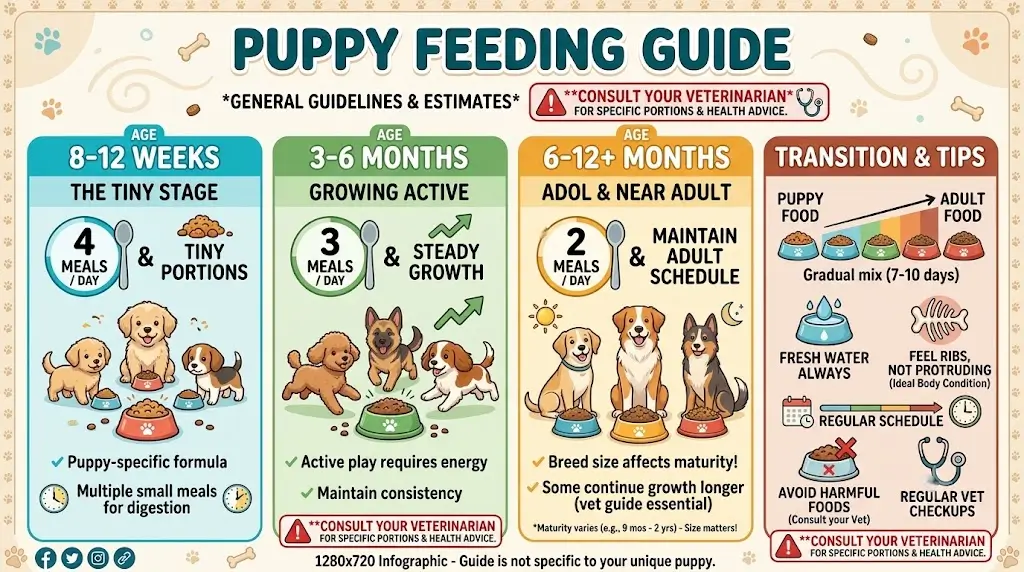
The puppy diet plan is very much dependent upon the age of the puppy. Little pups have little bellies, but big appetites; they should be fed several small meals a day.
- 2 to 4 months old: 4 meals per day
- 4 to 6 months old: 3 meals per day
- 6 months and older: 2 meals per day
A consistent plan for your puppy’s daily routine will help keep his digestion under control and make house training much easier.
How much feed is sufficient for a puppy?
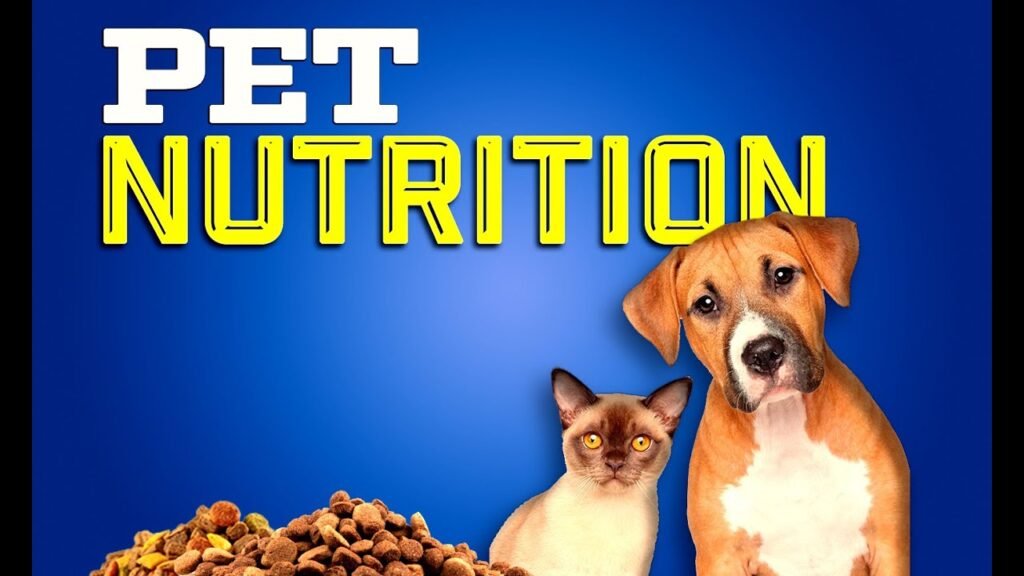
The exact amount of puppy food will not be a simple solution. The amount of daily puppy food your puppy eats will be completely dependent on three factors:
- Their current age
- Their current weight
- The size they are estimated to be as adults (Toy, Small, Medium, Large, Giant breed)
The simplest method is to use a typical puppy feeding chart. Here is a basic rule for how much food to give your puppy each day, depending on his adult size. The following is a guideline from ThePuppyCare for how much food will be required daily for your puppy based on what you think his adult weight will be.
The Puppy Care Puppy Feeding Chart
Expected Adult Weight | 2–4 Months Old (Total Daily Cups) | 5–8 Months Old (Total Daily Cups) | 9–12 Months Old (Total Daily Cups) |
Toy Breeds (Under 10 lbs) | 1/3 to 1 cup | 1/2 to 1 cup | Transition to adult food |
Small Breeds (10–20 lbs) | 1 to 2 cups | 1.5 to 2.5 cups | 1.5 to 2 cups |
Medium Breeds (21–50 lbs) | 2 to 3.5 cups | 2.5 to 4 cups | 3 to 4 cups |
Large Breeds (51–100 lbs) | 3 to 5 cups | 4 to 6 cups | 5 to 7 cups |
Note: Remember to divide the cups of food your puppy has per day by how many meals your puppy has each day. For instance, if the chart indicates 3 cups per day and you are eating 3 meals per day, then you should have 1 cup for each meal.
Crucial Tips for Managing Your Puppy Food Amount
- Read the Bag First: Each dog food brand is different with regard to calorie density. A high-quality, nutrient-rich kibble could contain up to twice as many calories per cup as a low-quality, low-cost brand. Never use your puppy feeding schedule without referring to the directions that are printed on the back of your food bag.
- Be sure to monitor the Body Condition: Don’t just look at the numbers. Check the puppy’s side. Their ribs should be able to be felt under a thin layer of fat, and they should have a waistline when looked at from above. If you can’t feel their ribs, decrease their puppy food portions a bit.
- The 10% Treat Rule: Treats can quickly add up, and training is essential for a growing pup! Avoid more than 10% of their daily calories from makeup training.
When to Transition to Adult Food
Once your puppy has reached adulthood, his nutritional requirements will change. Not transitioning them back to a maintenance diet can cause them to become fat.
Small breeds typically will reach maturity at 9-12 months; large and giant breeds may take up to 18-24 months. Discuss with your veterinarian how to wean your puppy to a balanced adult food in a safe manner when the time is appropriate.
Following a puppy diet plan and watching your puppy development is the best way to give your furry best friend a good start in life. If you’re looking for more serious puppy health care, continue to explore ThePuppyCare!
FAQ's
What does a “too thin” puppy look like?
If your puppy ribs, spine, or hip bones are sticking out of the fur, it means that they are eating too little food for their puppy nutrition, or it is a lower calorie level.
A large breed of puppy requires a different type of diet plan.
Yes. Large breed puppies require a puppy diet plan with a lower calcium and fat content to ensure that they don’t grow too quickly, thereby helping to prevent harmful growth in their puppy joints.
May use normal puppy food as a training treat?
Absolutely! A great way to reward good behavior without feeding too much to your pups is to use some of their measured daily food amount to train them.
When to stop feeding with a puppy feeding chart and begin feeding adult food?
The small breeds can be fed adult food from 9 to 12 months. Large and Giant breeds remain on a healthy puppy diet until 18-24 months.
Would it be advisable to enhance my puppy nutrition guide?
In cases where high-quality commercially prepared puppy food is being fed, supplements should be avoided. Too much calcium or vitamins can be detrimental to your puppy’s growth.